Email id.

-
-
Phone No.
+91 9920081881
-
Location
Get Direction
Email id.
Phone No.
Location
Laparoscopic urology is a minimally invasive surgical approach used to diagnose and treat several urological conditions through small incisions. Compared with traditional open surgery, laparoscopic procedures generally involve smaller cuts and the use of a camera and specialized surgical instruments to perform the procedure.
If you are looking for the Best Laparoscopic Urology Surgeon in Dadar, Mumbai, Dr. Rahul Satiya provides consultation and treatment planning for urological conditions that may be suitable for laparoscopic surgery. The recommended procedure depends on the patient's condition, medical history, imaging findings and other clinical factors.
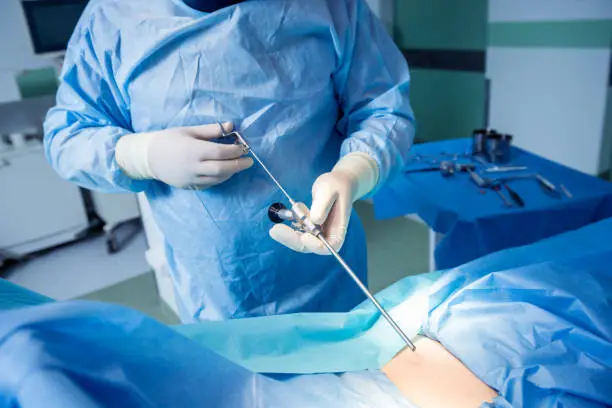
Laparoscopic urology involves performing urological surgery through small incisions rather than one large surgical incision. A thin camera called a laparoscope is inserted through one of the small openings, allowing the surgeon to view the surgical area on a monitor.
Specialized instruments are inserted through additional small incisions to perform the required procedure. Depending on the condition, laparoscopic surgery may be considered for procedures involving the kidneys, ureters, adrenal glands and other parts of the urinary system.
Laparoscopic surgery may be considered for selected urological conditions and procedures, including:
Kidney Conditions - Certain kidney conditions may be treated using laparoscopic techniques. Depending on the diagnosis, procedures may include partial nephrectomy or radical nephrectomy.
Kidney Tumors - Laparoscopic partial nephrectomy may be considered for selected kidney tumors where removal of the tumor while preserving healthy kidney tissue is appropriate. In other situations, laparoscopic radical nephrectomy may be considered to remove the affected kidney.
Ureteric Conditions - Selected conditions affecting the ureter may require surgical treatment. Laparoscopic techniques can be used for certain procedures depending on the location and nature of the problem.
Urinary Obstruction - Some urinary blockages may require surgical correction. Laparoscopic surgery can be considered for selected causes of obstruction based on the location and severity of the blockage.
Adrenal Conditions - Certain adrenal gland conditions requiring surgery may be treated using laparoscopic techniques when clinically appropriate.
Other Selected Urological Conditions - Laparoscopic approaches may also be used for selected reconstructive and urological procedures. The suitability of laparoscopic surgery depends on the individual diagnosis and the surgeon's clinical assessment.
Before surgery, the patient is evaluated through medical history, physical examination and appropriate investigations. Imaging tests and laboratory investigations may be recommended depending on the condition.
During laparoscopic surgery, small incisions are made to introduce the laparoscope and specialized instruments. The surgeon views the operative area on a monitor and performs the required procedure using these instruments.
The number and location of incisions vary depending on the type of surgery being performed.
Laparoscopic surgery can offer several potential advantages compared with traditional open surgery in appropriately selected patients:
The expected recovery period varies according to the procedure, the patient's overall health and the individual surgical circumstances.
Traditional open surgery usually requires a larger incision to access the surgical area. Laparoscopic surgery uses smaller incisions and a camera-assisted approach.
However, laparoscopic surgery is not suitable for every patient or every urological condition. The surgeon may recommend an open procedure or another treatment approach when it is more appropriate for the patient's condition.
Before surgery, the doctor may review:
The doctor will explain the proposed procedure, expected recovery, possible risks and available alternatives before treatment.
Recovery depends on the type of laparoscopic procedure performed and the patient's overall health. Patients may be advised to gradually return to normal activities according to their recovery.
Follow-up appointments may be recommended to monitor healing and evaluate the treatment outcome. The doctor may also provide specific instructions regarding medication, physical activity, diet and wound care.
You should consider a urological evaluation if you experience symptoms such as:
Early evaluation can help identify the underlying cause and determine whether medication, observation, endoscopic treatment, laparoscopic surgery or another approach may be appropriate.
Dr. Rahul Satiya is a qualified Consultant Urologist and Andrologist with MBBS, DNB in General Surgery and DrNB in Urology, and over 8 years of surgical experience. He provides evaluation and treatment planning for selected urological conditions requiring laparoscopic or other appropriate treatment. For consultation enquiries, contact Dr. Rahul Satiya at 09920081881.
If you are looking for Best Laparoscopic Urology Surgeon in Dadar, Mumbai, Dr. Rahul Satiya provides consultation and treatment planning for selected urological conditions that may be suitable for laparoscopic surgery. Treatment recommendations are based on the patient's diagnosis, symptoms, medical history, investigation reports and individual surgical requirements. For consultation enquiries, you can contact Dr. Rahul Satiya at 99200 81881.
Ans - Laparoscopic urology is a minimally invasive approach in which selected urological surgeries are performed through small incisions using a camera and specialized surgical instruments.
Ans - Selected kidney, ureteric, adrenal and reconstructive urological conditions may be treated using laparoscopic techniques. The appropriate treatment depends on the individual diagnosis.
Ans - Laparoscopic surgery can provide benefits such as smaller incisions and potentially faster recovery for selected procedures. However, it is not appropriate for every patient or every condition. The choice depends on the clinical situation.
Ans - Yes. Laparoscopic surgery generally uses several small incisions instead of the larger incision associated with many traditional open procedures.
Ans - Selected kidney tumors may be treated with laparoscopic partial nephrectomy or radical nephrectomy depending on factors such as tumor size, location and the patient's overall condition.
Ans - Laparoscopic partial nephrectomy is a procedure in which the kidney tumor or affected portion is removed while preserving as much healthy kidney tissue as clinically possible.
Ans - Laparoscopic radical nephrectomy is a minimally invasive procedure used to remove an affected kidney when complete removal is medically indicated.
Ans - Some causes of urinary obstruction may be treated using laparoscopic surgery. The appropriate procedure depends on the location and cause of the obstruction.
Ans - Recovery varies according to the type of surgery, the patient's health and the complexity of the procedure. Your urologist can provide more specific recovery guidance after evaluating your condition.
Ans - Laparoscopic surgery uses small incisions, which generally result in smaller scars than traditional open surgery. The number and location of incisions depend on the procedure.
Ans - Depending on the condition, the doctor may recommend blood and urine tests, ultrasound, CT scan, MRI or other investigations to evaluate the condition and plan treatment.
Ans - No. The suitability of laparoscopic surgery depends on the patient's diagnosis, anatomy, previous surgeries, overall health and other clinical factors.
Ans - You should consult a urologist if you have persistent urinary symptoms, blood in the urine, recurrent urinary infections, kidney or ureteric problems, or an abnormality identified through imaging.
Ans - Dr. Rahul Satiya is a Consultant Urologist and Andrologist in Dadar, Mumbai, with qualifications including MBBS, DNB in General Surgery and DrNB in Urology. He provides evaluation and treatment planning for selected urological conditions that may require laparoscopic surgery.