Email id.

-
-
Phone No.
+91 9920081881
-
Location
Get Direction
Email id.
Phone No.
Location
The prostate is an important gland in the male reproductive system. As men age, changes in the prostate can affect urinary function, sexual health, and overall quality of life. Conditions such as benign prostatic hyperplasia (BPH), prostatitis, and prostate cancer may cause symptoms ranging from mild urinary discomfort to problems that require specialist evaluation.Best Prostate Treatment in Dadar, Mumbai
Dr. Rahul Satiya provides urological consultation and treatment for prostate-related conditions in Dadar, Mumbai. Diagnosis and treatment are planned according to the patient's symptoms, medical history, examination findings, test results, and individual requirements.
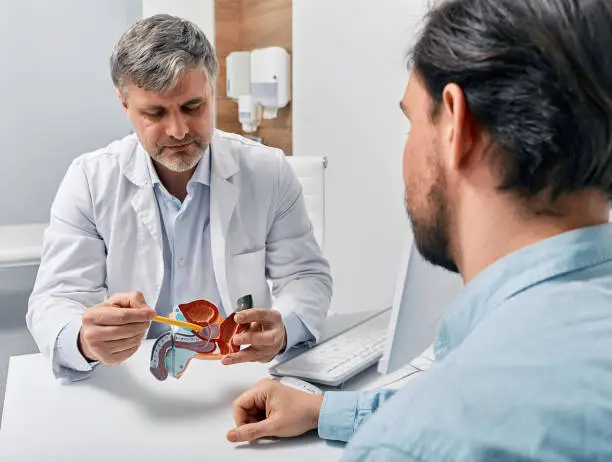
The prostate contributes to male reproductive health by producing a fluid that forms part of semen. This fluid helps support and protect sperm. The prostate remains relatively small during childhood and grows during puberty under the influence of male hormones. It may continue to enlarge gradually with age.
While some prostate enlargement is a normal part of aging, significant enlargement, inflammation, or abnormal changes may cause urinary or other symptoms that require medical evaluation.
The prostate performs several important functions related to male reproductive and urinary health.
Several conditions can affect the prostate. Some are benign and commonly associated with aging, while others may require specific medical or surgical treatment.
Benign Prostatic Hyperplasia (BPH)- Benign prostatic hyperplasia is a non-cancerous enlargement of the prostate. It becomes increasingly common with age. As the prostate enlarges, it can narrow the urethra and interfere with normal urine flow.
BPH may cause difficulty starting urination, a weak urine stream, frequent urination, nighttime urination, urgency, and a feeling that the bladder has not emptied completely.
Prostatitis- Prostatitis refers to inflammation of the prostate. It may be associated with infection or other causes and can occur in men of different age groups.
Symptoms may include pelvic discomfort, painful urination, urinary frequency, difficulty passing urine, and pain during or after ejaculation.
Prostate Cancer- Prostate cancer develops when abnormal cells grow within prostate tissue. Some prostate cancers grow slowly, while others may be more aggressive.
Early prostate cancer may not cause noticeable symptoms. Appropriate evaluation and discussion of screening can therefore be important for men with relevant age, family history, or other risk factors.
Prostate conditions may affect the urinary system because of the prostate's close relationship with the urethra.
Common symptoms may include:
Not every urinary symptom is caused by a prostate problem. Urinary infections, bladder conditions, urethral problems, diabetes, and other medical conditions can cause similar symptoms.
Different prostate conditions have different causes and risk factors.
Factors associated with prostate problems may include:
Having a risk factor does not necessarily mean that a person will develop a prostate condition. A urologist can assess individual risk and recommend appropriate evaluation.
Diagnosis usually begins with a detailed discussion of symptoms and medical history. A urologist may recommend different investigations depending on the patient's age, symptoms, risk factors, and examination findings.
Diagnostic evaluation may include:
The investigations recommended will depend on the individual's clinical situation.
There is no single treatment suitable for every prostate condition. Treatment depends on the diagnosis, severity of symptoms, prostate size, overall health, and other individual factors.
Medicines for Enlarged Prostate- Medications may be recommended for men experiencing bothersome symptoms due to an enlarged prostate. Different medicines work in different ways, including relaxing muscles around the prostate and bladder or reducing prostate growth over time.
Minimally Invasive Procedures- Some patients with prostate enlargement may be suitable for minimally invasive procedures that aim to improve urine flow and reduce obstruction. The appropriate procedure depends on factors such as prostate size, anatomy, symptoms, and overall health.
Surgical Treatment- Surgery may be considered when symptoms are significant, complications develop, or medicines do not provide sufficient relief. The appropriate surgical approach depends on the underlying condition and individual patient factors.
Prostate Cancer Treatment- Treatment for prostate cancer depends on factors such as the stage and grade of cancer, risk category, overall health, and individual circumstances. Depending on the diagnosis, treatment may include active surveillance, surgery, radiation therapy, hormone-based treatment, or other cancer treatments.
Modern urology provides several approaches for diagnosing and treating prostate conditions. Advances in imaging, diagnostic evaluation, minimally invasive procedures, and surgical techniques have expanded treatment options for appropriately selected patients.
Modern prostate care may include:
The most appropriate treatment should be decided after proper evaluation rather than based only on symptoms or prostate size.
You should consider consulting a urologist if urinary symptoms persist, become progressively worse, or begin affecting sleep and daily activities.
A specialist evaluation is particularly important if you experience:
Men with a family history of prostate cancer or other relevant risk factors may also benefit from discussing appropriate evaluation with a urologist.
Dr. Rahul Satiya is a qualified Consultant Urologist and Andrologist with over 8 years of surgical experience. He provides evaluation and treatment planning for prostate conditions based on symptoms, diagnosis and investigation reports. For Best Prostate Treatment in Dadar, Mumbai, contact Dr. Rahul Satiya at 09920081881.
If you are looking for Best Prostate Treatment in Dadar, Mumbai, Dr. Rahul Satiya provides consultation and treatment planning for prostate-related conditions based on symptoms, diagnosis, medical history and investigation reports. For consultation enquiries, contact Dr. Rahul Satiya at 99200 81881.
Ans - Benign prostatic hyperplasia (BPH), or non-cancerous enlargement of the prostate, is a common prostate condition in older men. It can cause difficulty urinating, weak urine flow, increased frequency and other lower urinary tract symptoms.
Ans - No. An enlarged prostate due to BPH is a non-cancerous condition. However, prostate enlargement and prostate cancer can occur in the same person, so persistent or concerning symptoms should be evaluated appropriately.
Ans - Early symptoms may include difficulty starting urination, a weak urine stream, increased urinary frequency, waking at night to urinate and a sensation of incomplete bladder emptying.
Ans - Yes. Because the prostate surrounds part of the urethra, enlargement or inflammation can interfere with urine flow and cause symptoms such as a weak stream, hesitancy or incomplete bladder emptying.
Ans - No. Frequent urination can have several causes, including BPH, urinary infection, diabetes, bladder conditions and excessive fluid intake. A urological evaluation can help identify the cause.
Ans - PSA, or prostate-specific antigen, is a protein produced by prostate tissue. A blood test can measure PSA levels. PSA may be elevated for several reasons, including prostate enlargement, inflammation, infection and prostate cancer, so results need to be interpreted in clinical context.
Ans - No. Treatment depends on the underlying condition and severity. Some patients may be managed with monitoring or medicines, while selected patients with significant obstruction or other indications may require a procedure or surgery.
Ans - Many men with BPH can initially be managed with lifestyle measures, monitoring or medicines. If symptoms remain bothersome or complications occur, a urologist may discuss procedural or surgical options.
Ans - Some prostate conditions and their treatments can be associated with sexual symptoms, including discomfort during ejaculation or changes in sexual function. The effect varies depending on the underlying condition and treatment.
Ans - You should consider a urological consultation if urinary symptoms persist, worsen or interfere with daily activities or sleep. Blood in the urine, urinary retention, persistent pelvic pain or other concerning symptoms should be medically evaluated.
Ans - No. Early prostate cancer may not cause noticeable symptoms. Depending on age, family history and individual risk factors, a doctor may discuss appropriate screening and evaluation.
Ans - Yes. Patients in Dadar and nearby areas can consult a urologist for evaluation of urinary symptoms, prostate enlargement, prostatitis and other prostate-related conditions. Treatment is selected according to the diagnosis and individual clinical requirements.